
| Source | What it covers | Access | Best for |
|---|---|---|---|
| Health Canada Drug Product Database (DPD) | Every drug product authorized for sale in Canada, by brand and generic name, with dosage form and status | Free, public | Confirming a product is actually authorized in Canada, its Drug Identification Number (DIN), and its regulatory status |
| PubMed/MEDLINE and Embase | Peer-reviewed pharmacy, pharmacology, and clinical trial literature | PubMed free; Embase typically via university library | Primary literature searches for efficacy, safety, and mechanism-of-action questions |
| Cochrane Library | Systematic reviews and meta-analyses of drug interventions | Often free via Canadian university/provincial licences | Evidence synthesis on a specific drug or drug class rather than a single trial |
| CDA-AMC (Canada’s Drug Agency, formerly CADTH) | Health technology assessments, reimbursement reviews, and formulary recommendations for Canada | Free, public | Cost-effectiveness and health-system adoption questions specific to the Canadian context |
| Provincial drug formularies (e.g. Ontario Drug Benefit Formulary, RAMQ list in Quebec) | Which drugs a provincial public plan actually covers, and under what conditions | Free, public, per province | Questions about real-world access and reimbursement rather than clinical availability alone |
| Canadian Institute for Health Information (CIHI) | Prescription drug utilization, hospital drug-related admissions, health-system data | Free, public (aggregate); microdata via request | Population-level utilization and outcomes questions |
Start with the Drug Product Database, even for a purely clinical question
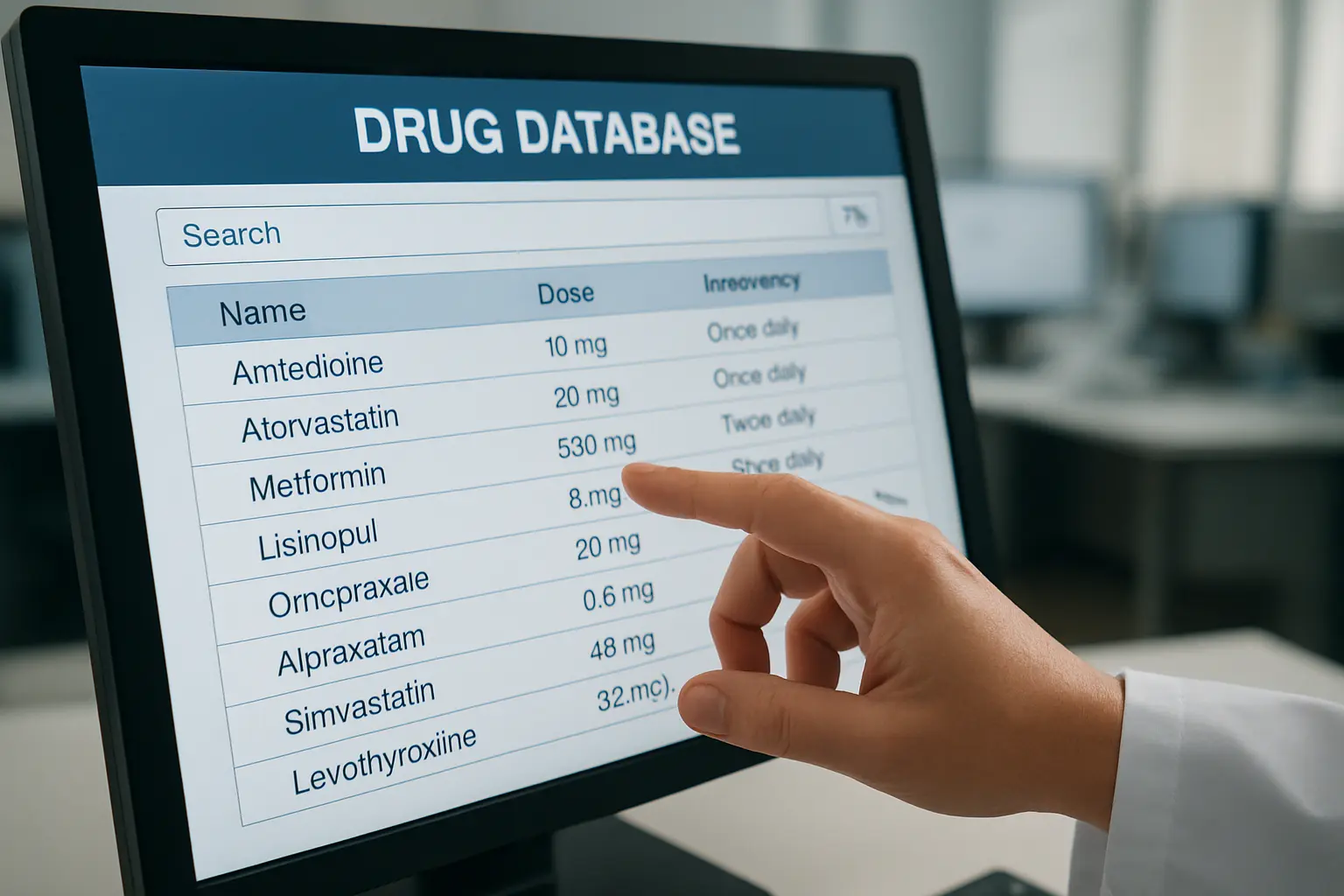
Before citing a drug’s Canadian approval status, indication, or dosage form in a thesis, check it directly in Health Canada’s Drug Product Database rather than relying on a manufacturer’s website or an American source — approved indications, formulations, and even brand names frequently differ between Canada and the United States, and citing a US-only indication as though it applies in Canada is a factual error examiners in pharmacy programs specifically watch for. The DPD gives you the Drug Identification Number (DIN), which is the correct, citable identifier for a specific Canadian drug product in your methods or background chapter, rather than a generic drug name alone. This kind of regulatory-source discipline parallels how Canadian legal research for a thesis insists on the official, current version of a statute rather than a secondary summary — the underlying principle is the same across fields.
Where to find the clinical and safety evidence
PubMed/MEDLINE remains the default starting point for peer-reviewed pharmacy and pharmacology literature, and is free without an institutional login, which matters if you are working from home without VPN access to your university library. Embase, typically accessible only through your institution, indexes a broader range of international pharmaceutical and conference literature and is the standard second database for a comprehensive pharmacy literature search — a thesis search strategy citing only PubMed, with no Embase or equivalent second database, is a common and avoidable gap. For questions that are really about the weight of evidence across multiple trials rather than a single study, the Cochrane Library’s systematic reviews are usually the fastest way to establish current consensus before you go back to individual primary studies. A thesis synthesizing evidence this way rather than collecting new data follows a distinct format of its own — see how a systematic-review thesis in an adjacent health field structures that process, including the same PubMed/Embase/Cochrane database combination used here.
Where to find Canadian-specific cost-effectiveness and reimbursement evidence
CDA-AMC (Canada’s Drug Agency, the body formerly known as CADTH) is the source most Canadian pharmacy theses miss, and it is specifically valuable because it answers a different question than clinical-trial literature does: not “does this drug work,” but “is this drug worth what the Canadian health system pays for it, and should provinces list it.” Its health technology assessment reports and reimbursement reviews are free and public, and they are the standard reference for any thesis question involving drug pricing, formulary decisions, or health-system adoption in Canada specifically — a question a US-based cost-effectiveness study cannot answer for the Canadian context.
Where to find what patients can actually access
A drug being approved by Health Canada does not mean a patient can affordably access it — that depends on provincial formulary listing, which varies by province. The Ontario Drug Benefit Formulary and Quebec’s RAMQ list (Liste des médicaments) are the two largest provincial examples, and a thesis discussing real-world drug access or adherence needs to specify which province’s formulary applies to its population, since coverage rules genuinely differ enough between provinces to change the answer. Checking a formulary directly, rather than assuming national approval implies coverage, is a distinction pharmacy examiners specifically look for in an access- or adherence-focused thesis.
Where to find utilization and population-level data
The Canadian Institute for Health Information (CIHI) publishes aggregate data on prescription drug utilization, drug-related hospital admissions, and broader health-system indicators, most of it free and public at the summary level. For a thesis needing finer-grained or linked administrative data — individual-level prescribing patterns linked to outcomes, for example — a formal data request or access through a provincial health-data institute is usually required, and that access process can take months, so it needs to be planned into your timeline early rather than assumed to be quick. This mirrors how economics and finance theses plan around the access lag built into Canadian financial and economic data sources generally — administrative and institutional data almost never arrives on a research timeline.
Why a Canadian-specific search matters even for a global drug question
It is tempting to treat pharmacy evidence as universal — a drug’s mechanism of action does not change at the border. But regulatory status, approved indications, formulary listing, provincial reimbursement rules, and even generic-substitution regulations are all jurisdiction-specific, and a thesis that draws its entire evidentiary base from US or UK sources without checking the Canadian-specific layer risks conclusions that do not actually hold for the population it claims to describe. This is a distinct failure mode from simply using non-Canadian primary literature, which is normal and expected — the problem is skipping the step of checking whether the Canadian regulatory and access context changes the conclusion.
What counts as a professional versus an academic source in pharmacy
The Canadian Pharmacists Association (CPhA), through its RxTx compendium, is the standard professional reference Canadian pharmacists use in practice for dosing, interactions, and monitoring guidance — genuinely useful for a thesis background section establishing current practice standards, but distinct from peer-reviewed primary literature and should be cited as a professional compendium, not as research evidence. Similarly, guidance from the National Association of Pharmacy Regulatory Authorities (NAPRA) is the right citation for questions about pharmacist scope of practice and regulatory standards across Canadian provinces, not for clinical efficacy questions. Keep these three source types — regulatory (Health Canada, provincial regulators), professional/practice (CPhA, NAPRA), and academic/peer-reviewed (PubMed, Embase, Cochrane) — clearly distinguished in your literature review rather than blending them into one undifferentiated reference list.
Where to find clinical trial data specifically
For a thesis question about ongoing or completed clinical trials rather than published results, Health Canada’s Clinical Trials Database and the international ClinicalTrials.gov registry serve different but complementary purposes. Health Canada’s database tracks trials authorized to proceed in Canada specifically, including trials that may never have published results — useful for identifying publication bias in your literature review, since a thesis that only searches published literature misses trials that were registered but never reported. ClinicalTrials.gov has broader international coverage and is the more commonly searched registry in practice, but a Canada-specific pharmacy thesis should check both, since a trial conducted in Canada is not guaranteed to appear, or appear completely, in the international registry.
Common mistakes pharmacy theses make with sourcing
- Citing a manufacturer’s product monograph as if it were independent evidence. A product monograph is a regulatory document reflecting what Health Canada approved, not an independent efficacy assessment — useful for confirming approved indications and dosing, not as a substitute for peer-reviewed literature.
- Treating US and Canadian drug names as interchangeable. Brand names frequently differ between the two countries even for the same active ingredient, and assuming otherwise produces citation errors that are simple to avoid by checking the DPD.
- Skipping the grey literature and trial registries entirely. A literature review built only from published, indexed articles systematically overrepresents positive results — a known and well-documented publication-bias pattern in pharmaceutical research specifically.
- Citing a CDA-AMC review’s recommendation without checking its publication date against current formulary status. Formulary decisions and health technology assessment recommendations can be superseded by newer reviews or provincial decisions; always check the most recent version.
A worked example of a multi-source search
For a thesis question such as “how does public formulary coverage affect adherence to a specific drug class in Ontario,” a defensible search would combine: the Ontario Drug Benefit Formulary (to establish exact coverage criteria and any restrictions), CIHI utilization data (to establish population-level prescribing and adherence patterns), PubMed/Embase (for prior adherence-determinants literature on this drug class generally, not necessarily Canada-specific), and CDA-AMC (to check whether a relevant reimbursement review exists that already analyzed cost-related non-adherence for this class). No single source answers the whole question; the thesis’s contribution often lies precisely in connecting sources that are not normally read together.
Frequently asked questions
Is the Drug Product Database the same as Health Canada’s clinical trial database?
No — the DPD lists authorized marketed products; Health Canada’s separate Clinical Trials Database tracks trials currently or previously conducted in Canada. A thesis needing information on an ongoing or historical Canadian trial should search the trials database, not the DPD.
Can I use American FDA data for a Canadian pharmacy thesis?
Only with explicit framing — FDA-approved indications, dosing, and formulations sometimes differ from Health Canada’s, so use US sources for the underlying clinical trial evidence where relevant, but confirm current Canadian-specific status through the DPD before making any claim about availability, indication, or dosing in Canada.
Do I need REB approval to use CIHI aggregate data?
Publicly available aggregate CIHI data generally does not require REB approval since it involves no identifiable individual-level information, but any request for linked or individual-level administrative data typically does require both REB approval and a formal data-access agreement — confirm the specific dataset’s classification before assuming either way. When in doubt, treat it the same way you would treat any question about REB approval generally: ask your ethics office directly rather than inferring the answer from a similar-looking prior study.
How current does provincial formulary information need to be?
Formularies are updated regularly, sometimes monthly, so cite the specific access date you checked the formulary, not just the year, and note in your limitations if your thesis timeline spans a formulary update that could affect your findings.
Is CDA-AMC the same organization as CADTH?
Yes — CADTH was renamed Canada’s Drug Agency (CDA-AMC) as the organization’s mandate expanded; older citations and older thesis literature will still reference CADTH by its previous name, and both refer to the same body.
Where do I find data on drug shortages in Canada?
Health Canada maintains a public drug shortages reporting system separate from the DPD, where manufacturers are required to report anticipated and actual shortages — the right source for a thesis question about supply-chain or shortage-related access problems specifically, rather than the DPD, which only confirms authorization status.
Should I search French-language Quebec sources separately if my thesis is in English?
Yes, when your population includes Quebec — RAMQ’s formulary and INESSS (Quebec’s own health technology assessment body) publish primarily in French and are not always cross-indexed with English-language national sources, so a thesis with a Quebec-specific population component needs a deliberate French-language search in addition to the English sources above.
Where Tesify fits
Locating and evaluating the right mix of regulatory, professional, and academic sources for a specific pharmacy question is judgement work that stays with you and your supervisor. Tesify’s role is in organizing what you find — keeping DIN references, formulary citations, and peer-reviewed sources correctly and consistently formatted as your reference list grows across a literature review that draws on several very differently structured source types.