Comparison table first. Five tools, ranked on one criterion: can it see an error that is not an error in English?
| # | Tool | Reads French too | Explains or rewrites | Academic corpus | Price read 23 Aug 2026 |
|---|---|---|---|---|---|
| 1 | Antidote (Druide) | Yes, both correctors in one product | Explains, with dictionaries and guides | General, not academic-specific | Bilingual personal plan 89.95 first year, 72 on renewal |
| 2 | LanguageTool | Yes, 30+ languages including French | Explains the rule | General | Free tier; Premium price not verifiable on the day |
| 3 | Writefull | No, English only | Explains, and suggests academic phrasing | Yes, models built on journal articles | Pricing page returned 404 on the day |
| 4 | Grammarly | No, English only | Mostly substitutes | General | Free tier; see our ranked tools guide |
| 5 | DeepL Write | Translation company, but Write is monolingual output | Rewrites | General | Free tier within the DeepL product line |
Prices are the figures displayed on each vendor’s own page on 23 August 2026; Antidote’s are from Druide’s Canadian store, and you should confirm currency and taxes on the page itself before buying. Where a figure could not be read, we say so rather than repeating one from memory.
Why the usual criteria do not decide this
Most tool comparisons rank on detection accuracy. That cannot work here, because the sentences in question are correct.
The actual literature does not permit to conclude that the delay was important.
Every word is an English word. The grammar is sound. A monolingual checker has nothing to object to. But a Canadian examiner reads it as: the current literature does not allow us to conclude that the deadline was significant — three separate French words wearing English clothes, plus a verb pattern lifted straight from ne permet pas de.
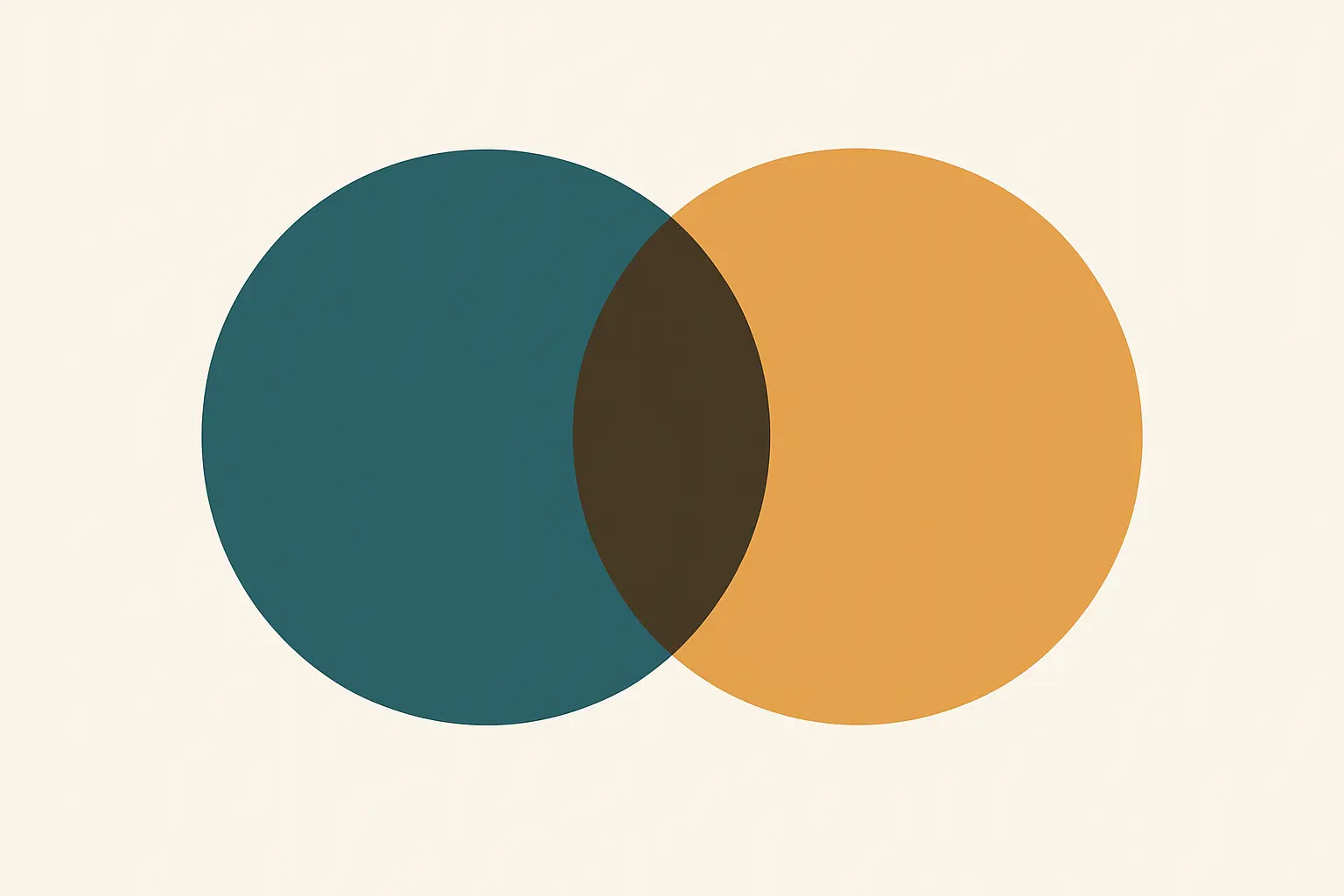
So the criterion that decides is architectural: does the product hold a model of French at the same time as it checks your English? If it does not, it can only tell you that a sentence reads oddly. If it does, it can tell you why, and the why is the part you learn from.
The ten error classes, and who can see each one
This is the substance of the comparison. Grouped by mechanism, hardest to detect first.
1. False friends
Actual for current. Eventually for possibly. Important for large. Delay for deadline. Evidence for obviousness. Formation for training. Sensible for sensitive. Achieve for complete. Every one produces a grammatical sentence with the wrong meaning. Only a bilingual tool has any reason to stop here, because the flag has to come from the French side.
2. Prepositions governed by the French verb
Depend of, discuss about, participate to, assist to a conference, based in for based on. These are ungrammatical, so a good monolingual checker catches most of them — but it will offer a correction without telling you the pattern, so you make the same class of error again next week.
3. Calqued discourse markers
In a first time for first. Indeed deployed every third paragraph as a stand-in for en effet. Notably for namely. It is to note that. On the other hand used where French would use d’autre part without any preceding on the one hand. Detection here is weak across the board; this is a class you fix by knowing it exists.
4. Register mismatch
French academic prose licenses an announcement style that English editors delete on sight: We will see in this chapter that…, It is important to note that…, This allows to demonstrate…. Writefull is the strongest of the five here precisely because its models are built on journal text rather than general English, so it has a sense of what published academic sentences look like.
5. Nominalisation density
The realisation of the analysis of the data instead of analysing the data. French rewards the nominal group; English examiners read a stack of them as evasion. No tool in this set reliably flags it as a style problem, though a rewriter will silently unpick it — which brings its own cost, below.
6. Typography that survives copy-paste
The space before a colon, semicolon, question mark and exclamation mark is correct French typography and wrong in English. It travels invisibly when you move text between documents. LanguageTool and Antidote both handle this class well; it is mechanical and it is exactly what rule-based checking is for.
7. Number formatting
This is the one that damages a results chapter. French uses a comma as the decimal separator and a thin space for thousands: 2 500,75. English Canadian academic style uses a point and a comma: 2,500.75. A table half-converted is worse than one not converted at all, because a reader cannot tell which convention any given cell follows. Check every table by hand regardless of what your tool says.
8. Capitalisation
French lowercases months, days and adjectives of nationality: en janvier, les chercheurs québécois. English capitalises all three. Monolingual checkers catch this reasonably well because the lowercase form is simply wrong in English.
9. The impersonal pronoun
On has no clean English equivalent, and the substitutions carry different weight: one reads as archaic in most fields, the passive reads as evasive in some and as standard in others, and we is disallowed by certain journals for a single-author paper. This is a judgement call your supervisor should make, not a tool.
10. Perfect versus simple past
The French passé composé maps onto two different English tenses depending on whether the finding is being connected to the present. Getting it wrong does not break the sentence; it slightly misplaces your claim in time, which matters most in a discussion chapter. The structural moves that surround those sentences are set out in the guide to writing the discussion chapter.
The five tools, in order
1. Antidote — the only one in the set that holds both languages at once
Druide’s product line is Québec-built and it is the only option here where a French dictionary and an English corrector sit inside the same application, with dictionaries and usage guides attached to each flag. That architecture is what addresses classes 1, 2, 6 and 8.
The purchasing trap to avoid: Druide sells the personal plan in two forms, one language or both. On the store page read on 23 August 2026, the single-language plan is 59.95 for the first year and 48 on renewal, and the English-and-French plan is 89.95 and 72. The single-language plan does not help you — it corrects English or French, not both, which removes exactly the bilingual layer you are buying the product for. The bilingual plan also advertises translations for 2.8 million words and expressions. Family plans exist at 99.95 and 149.95 for five users under one roof.
Weakness: it is a general-language product. It knows French and English; it does not know what a methods section sounds like.
2. LanguageTool — the free option that still reads both languages
LanguageTool describes itself as an AI-based grammar checker covering English, German, Portuguese, Spanish, French, Dutch and more than thirty other languages and dialects, and it publishes a business tier framed around GDPR compliance. It explains the rule behind a flag, which is the behaviour you want if you intend to stop making the error.
It is strong on the mechanical classes and weak on register. Its Premium pricing was not readable on the page we fetched on 23 August 2026, so we are not quoting a figure.
3. Writefull — the best register sense, and no French at all
Writefull states that its edits are produced by language models trained on millions of journal articles, which is a genuinely different proposition from a general grammar checker and shows in class 4. It offers a Word add-in, an Overleaf integration for LaTeX writers, and a pre-submission language check. On data handling it states plainly that none of your texts or searches are stored or used for training — the clearest statement in this set.
The limit is structural: it is monolingual. It can tell you that a sentence is unusual for a journal. It cannot tell you that actual was a faux ami.
Its pricing page returned a 404 on 23 August 2026, so institutional and individual costs could not be verified.
4. Grammarly — broad, monolingual, and it prefers to substitute
Grammarly is already ranked on this site for general English handling in our guide to the best AI tools for writing a thesis in Canada, and nothing here changes that assessment. For this specific job it sits fourth for two reasons: it has no French model, and its default behaviour is to offer a replacement rather than a rule. A replacement fixes today’s sentence and teaches nothing.
5. DeepL Write — the best output and the worst fit
DeepL Write will turn awkward second-language English into fluent idiomatic English better than anything else in this list. That is precisely the problem. What comes back is not your sentence, and a Canadian supervisory committee’s central question about any tool is whether you can still show which words are yours. Where that line sits is set out in what Canadian universities actually permit.
A defensible use exists: run a paragraph through it to see an idiomatic version, then rewrite your own sentence yourself, without pasting. An indefensible one exists too, and it is the easier of the two.
The recommendation, and the runner-up on a tighter budget
Buy the bilingual Antidote plan if you are a francophone writing a thesis in English in Canada. It is the only product in the set whose architecture addresses the error classes that cost you marks, and the single-language plan is a false economy that removes the reason to buy it.
If the budget is not there: LanguageTool’s free tier, used in both languages, plus one pre-submission pass through Writefull’s revise check. That combination covers the mechanical classes for nothing and the register class once, at the moment it matters. Add a printed list of the ten classes above beside your screen — for classes 3 and 5 that list is still the best detector available.

Why we are not ranking these on measured accuracy
Because we could not verify a current, independent benchmark of first-language-transfer error detection across these five products, and inventing one from a handful of test sentences would produce a number that looks authoritative and means nothing. This ranking is on published capability and product architecture: what each vendor says the product does, read from its own pages on 23 August 2026, and what its design can structurally see. Where a page did not load, we have said so.
One Canadian rule that applies whichever tool you pick
Most Canadian graduate schools permit language revision of a thesis and prohibit rewriting, and several state the boundary in exactly those terms. That single distinction determines which of the five tools is safe: a checker that flags and explains leaves the revision in your hands, and a rewriter does not. The same boundary applies when you turn the work into a paper afterwards, where the disclosure obligations are set out in how to turn your thesis into a journal article.
Where Tesify sits in this
Tesify is not a grammar checker and does not compete with the five above. It works one level up: the structure of the chapter, the consistency of the argument across sections, and citations formatted the same way from page one to page ninety. If you are writing in your second language, that structural layer is where the time actually goes, because holding a ninety-page argument together is hard enough in a first language. Run a checker over the sentences; use Tesify for everything larger than a sentence.
Frequently asked questions
Why does my English grammar checker miss these errors?
Because a calque is grammatical English. The sentence has correct syntax and real English words, so a monolingual checker has nothing to flag. The error only exists relative to the French it was thought in, and a tool with no model of French cannot see that relation.
Which tool is best for a French speaker writing a thesis in English?
Antidote, on the bilingual plan, because it is the only product in this comparison that holds a French dictionary and an English corrector in the same application. That architecture is what addresses false friends, verb prepositions and French typography.
Is the cheaper single-language Antidote plan enough?
No. The single-language plan corrects English or French, not both, which removes the bilingual layer that is the entire reason to choose it for this job. On Druide’s store page the difference was 59.95 against 89.95 for the first year.
What is the best free option?
LanguageTool’s free tier, used in both languages. It covers the mechanical classes such as verb prepositions, French spacing before punctuation and capitalisation of months and nationalities, and it explains the rule rather than silently substituting.
What are false friends, and which ones matter most in a thesis?
Words that look identical across the two languages and mean different things. The ones that cause the most damage in academic writing are actual for current, eventually for possibly, important for large, delay for deadline, evidence for obviousness and formation for training.
Is DeepL Write acceptable for a Canadian thesis?
Only with care. It rewrites rather than explains, so what comes back is not your sentence, and the central question a Canadian committee asks is whether you can still show which words are yours. Reading an idiomatic version and then rewriting your own sentence is defensible; pasting the output is not.
Do these tools fix number formatting in my results tables?
Not reliably, and this is the class most worth checking by hand. French uses a comma decimal separator and a thin space for thousands, English Canadian style uses a point and a comma, and a half-converted table is worse than an unconverted one because the reader cannot tell which convention each cell follows.
Why is Writefull ranked third if it is built for academic writing?
Because it is monolingual. Its models are trained on journal articles, which makes it the strongest of the five on academic register, but it can only tell you that a sentence reads unusually. It cannot tell you which French word caused it.
Will a spell-checker catch the space before a colon?
LanguageTool and Antidote both handle it well, because it is a mechanical rule. It matters more than it sounds, since French spacing before colons, semicolons and question marks travels invisibly when you copy text between documents.
Should I write in French and translate, or write in English directly?
Writing directly in English produces fewer interference errors than translating, because translation preserves French sentence architecture even when every word is correct. It is slower at first and cheaper by the end.
Can my university stop me from using one of these tools?
Most Canadian graduate schools permit language revision and prohibit rewriting, which is a boundary about what the tool does rather than about which brand it is. Check your own programme rules, because the wording varies.
Why does this comparison not give an accuracy score?
Because no current independent benchmark of first-language-transfer error detection across these products could be verified, and a score improvised from a few test sentences would look authoritative while meaning nothing. The ranking is on published capability and product architecture instead.