
Here is a complete marketing thesis, built step by step around one illustrative, fictional study: the effect of influencer disclosure transparency on purchase intent among Canadian Gen Z consumers. Each step below shows the actual text a chapter of that thesis would contain and why it is built that way, so you can apply the same structure to your own topic.
Step 0: Check your topic has a testable variable pair before you start
Before building any of the chapters below, a marketing topic needs at least one independent variable you can manipulate or measure, one dependent variable you can measure as an outcome, and a population narrow enough to actually sample. “Social media marketing effectiveness” fails this check — it names a field, not variables. “Disclosure transparency” (independent) and “purchase intent” (dependent) among “Canadian Gen Z consumers” (population) passes it. Run this check on your own topic before drafting a title.
Step 1: Build a title that states the variables and the population
Worked example: “The Effect of Influencer Disclosure Transparency on Purchase Intent Among Canadian Gen Z Consumers: A Survey-Based Study.” The title names the independent variable (disclosure transparency), the dependent variable (purchase intent), the population (Canadian Gen Z consumers), and the method (survey) — a reader knows what the thesis tests before reading a word further.
Step 2: Write an abstract that reports the shape of the whole thesis
Worked example (illustrative, not a real study): “Influencer marketing disclosure requirements exist across Canadian and international advertising standards, but their effect on consumer purchase intent remains contested. This study surveys 220 Canadian consumers aged 18–25 (illustrative sample) to test whether disclosure transparency (fully disclosed vs. ambiguously disclosed sponsored content) affects purchase intent, and whether perceived source credibility mediates that relationship. Results indicate [illustrative placeholder for actual finding]. Implications for marketing practice and platform disclosure policy are discussed.” Notice the pattern: problem, method, sample, and a placeholder for the finding — write the abstract’s finding sentence last, once you actually have results.
Step 3: State the problem and research questions
The introduction chapter states why disclosure transparency matters as a marketing question: platform-level and regulatory disclosure requirements exist, but whether transparent disclosure helps or hurts purchase intent is genuinely unresolved in the literature, with some studies finding a credibility boost and others finding a persuasion-knowledge backlash effect. From that tension, two research questions follow directly:
- RQ1: Does disclosure transparency (fully disclosed vs. ambiguous) affect purchase intent among Canadian Gen Z consumers?
- RQ2: Does perceived source credibility mediate the relationship between disclosure transparency and purchase intent?
Step 4: Choose and justify a theoretical framework
Two frameworks fit this question well, and a strong methodology section names why. The Elaboration Likelihood Model (ELM) explains persuasion through central versus peripheral processing routes — relevant here because disclosure transparency may shift a viewer from peripheral (trusting the influencer’s implied endorsement) to central processing (consciously evaluating a sponsored claim) once disclosure is explicit. Source Credibility Theory explains why a perceived-credible source persuades more effectively, relevant to the mediation question in RQ2. Using both, rather than one in isolation, lets the thesis explain both the direct effect (RQ1) and the mechanism behind it (RQ2).
Step 5: Design the methodology
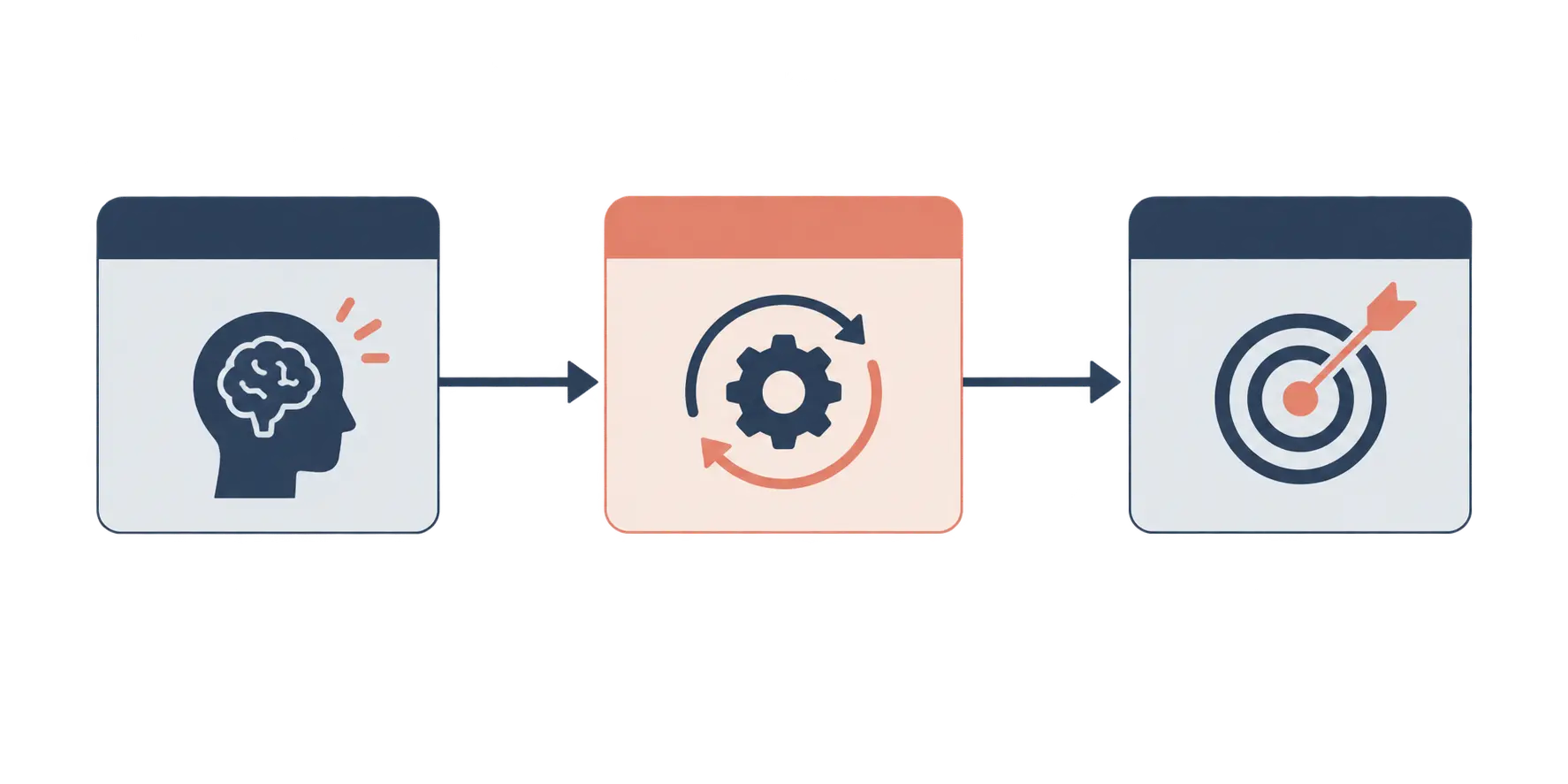
For this question, a between-subjects experimental survey is a common, defensible design: participants are randomly shown either a fully disclosed or ambiguously disclosed sponsored post, then answer validated scale items measuring perceived credibility and purchase intent. The methodology chapter would state: sampling approach (illustrative: online panel, Canadian residents aged 18–25), the experimental manipulation, the measurement scales used (naming actual validated scales you have sourced and cited, not invented ones), and the planned analysis — here, a mediation analysis testing whether source credibility carries the effect of disclosure transparency on purchase intent. State your ethics approval route explicitly: an online survey of identifiable or even anonymous consumers typically requires Research Ethics Board review under the TCPS 2 framework before data collection begins.
This is also where the methodology chapter should address measurement validity — briefly stating why the chosen scales are appropriate for a Canadian Gen Z sample specifically, since a scale validated on a different population or age group may need a stated justification for its use here, not just a citation.
Step 6: Report findings without interpreting them yet
A findings chapter for this design reports, in order: sample description (illustrative: 220 respondents, retention rate, demographic breakdown), the direct-effect test result for RQ1 (illustrative: group means and the statistical test used to compare them), and the mediation test result for RQ2 (illustrative: the indirect-effect estimate and its significance). Report the actual statistics your analysis produced — test statistic, degrees of freedom, p-value, effect size — rather than describing them only in words, and do not interpret what they mean for marketing practice yet; that is the discussion chapter’s job.
Step 7: Discuss what the findings mean, and state limitations
Discussion connects the findings back to ELM and Source Credibility Theory: does the result support a central-processing shift under transparent disclosure, or a peripheral-route persuasion effect regardless of disclosure? State limitations plainly — a single-platform, single-age-band sample does not generalise to all consumers or all platforms, and an experimental survey using a hypothetical purchase-intent measure is not the same as observing actual purchase behaviour. End with implications: for marketers, what does this suggest about how disclosure is communicated; for regulators or platforms, what does it suggest about disclosure format requirements.
Step 8: Write a conclusion that does more than summarise
A strong conclusion restates the contribution in one or two sentences, names the specific implication for marketing practice or policy, and suggests one or two concrete next steps for future research — for this example, illustratively, testing whether the effect holds across other age bands or platforms, rather than a generic call for “further research.”
Step 9: Finish the front and back matter
A complete specimen also needs a references list in your faculty’s required citation style (APA 7th edition is the most common in Canadian business schools, though confirm this rather than assuming), and appendices holding the full survey instrument, the exact wording of the experimental manipulation shown to each group, and the REB approval reference. A methodology chapter that describes an instrument the reader cannot actually see in the appendix is a common, easily fixed gap.
What makes this specimen pass versus what gets sent back
- Research questions that match the method. A mediation question (RQ2) needs a design and analysis capable of testing mediation, not just a correlation.
- Framework used throughout, not just cited once. ELM and Source Credibility Theory should shape both the hypotheses and the discussion, not appear only in the literature review.
- Real, cited scales. Measurement items for purchase intent and credibility should come from validated published scales you have sourced, not invented for the thesis.
- Findings and discussion kept separate. Reporting statistics without yet interpreting them, then interpreting in a distinct chapter, is what committees expect.
- Instruments actually included in the appendices. Referenced but missing survey text is an easy, avoidable gap.
Applying this structure to your own marketing topic
The same steps work for other marketing questions — pricing perception, brand loyalty, digital ad avoidance, B2B buying behaviour — by swapping the variables, framework, and design while keeping the same logic: a title that states the variables, an abstract with a clear shape, research questions matched to a justified method, findings reported before they are interpreted, and limitations stated plainly. If turning that structure into full chapter drafts of your own thesis is the slow part, Tesify can help you expand an outline like this one into full prose you review and edit yourself, chapter by chapter. Check Tesify’s pricing page for current plans.
For the comparison-of-methods and instrument-selection decisions this specimen’s methodology chapter draws on, see interviews vs focus groups for a marketing thesis if your design leans qualitative, and REB-ready survey and interview templates for building your own instrument. How many participants you need covers the sample-size question this article deliberately left illustrative, and how to run and report a multiple regression in SPSS is the closest existing analysis walkthrough to the mediation model referenced in Step 6.
Frequently asked questions
What topics make a strong marketing thesis?
Topics with a clear, testable consumer-behaviour or firm-decision question tend to work best — something narrower than “social media marketing” and specific enough to design a study around, such as a named platform behaviour, a named consumer segment, and a measurable outcome like purchase intent, trust, or brand recall.
What theoretical frameworks are common in marketing theses?
The Elaboration Likelihood Model (central vs peripheral persuasion routes), Source Credibility Theory, the Technology Acceptance Model for digital-adoption questions, and the Theory of Planned Behaviour for intention-based questions are all widely used and well documented — the right one depends on whether your question is about persuasion, adoption, or intention.
Do marketing theses need a survey?
Many do, especially where the research question is about a relationship across a population, but not all — a case study of one brand’s campaign, or qualitative interviews with marketing managers, are also standard designs depending on the question. The design should follow the question, not a default assumption that marketing means surveys.
How do I choose a sample size for a marketing thesis survey?
Sample size depends on your planned statistical analysis — a regression or SEM model has different minimum-sample guidance than a simple group comparison. Your supervisor or a statistics consultation service at your university is the right place to confirm a number for your specific design rather than using a generic rule of thumb.
What is the difference between findings and discussion in a marketing thesis?
Findings report what the data show — which relationships were statistically significant, with the actual statistics — without yet interpreting what they mean for marketing practice or theory. Discussion is where you connect those results back to your framework and literature, and state the managerial and theoretical implications.
Do I need ethics approval to survey consumers for a marketing thesis?
If you are collecting data directly from identifiable people, including an anonymous online survey of consumers, most Canadian business schools route that through their Research Ethics Board under the TCPS 2 framework before data collection. Purely secondary or publicly available data typically needs a lighter review; confirm with your programme rather than assuming.
What goes in the appendices of a marketing thesis?
Typically the full survey instrument or experimental stimulus materials, the exact wording shown to each experimental group, the REB approval reference, and any consent materials with identifying information removed. If your methodology chapter describes a scale or manipulation, a reader should be able to check its exact wording in the appendix.
Can I use a case study instead of an experiment for a marketing thesis?
Yes, if your research question is better answered by depth on one firm or campaign than by breadth across a sample — a “how” or “why” question about one brand’s strategy often fits a case study better than a survey. The choice should follow from your research question, not from which design feels more familiar.
Can Tesify help me write a marketing thesis like this example?
Tesify can help you draft and structure chapters modelled on the specimen in this article, once you have your own research question, data, and analysis — it is a writing and structuring aid, not a source of results. Check Tesify’s own pricing page for current plans.