
A mechanical engineering thesis methodology chapter has to do three things: name which of four broad approaches you are using (experimental, computational, design-and-build, or analytical), justify why that approach answers your specific research question, and state how you verified and validated your results. Below is how to build each part, with two worked examples.
Step 1: Name your methodology type
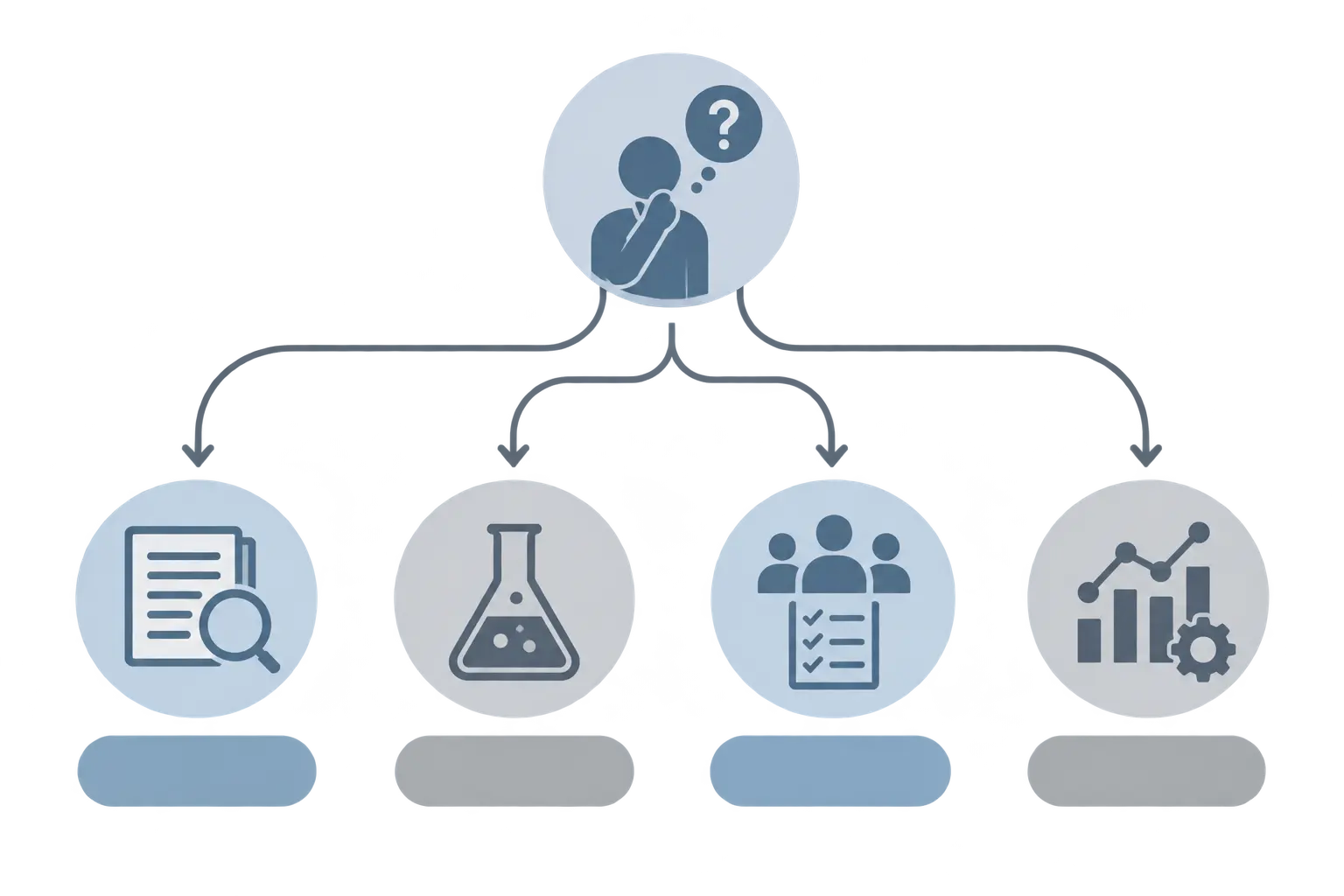
Most mechanical engineering theses fall into one of four categories, and a strong methodology chapter states which one, or which combination, in its first paragraph:
- Experimental: physical testing of a component, material, or system under controlled conditions.
- Computational: simulation-based analysis, typically FEA (finite element analysis) for structural or thermal problems, or CFD (computational fluid dynamics) for flow problems.
- Design-and-build: designing, prototyping, and testing a device or mechanism, common in capstone-adjacent thesis projects.
- Analytical: closed-form mathematical modelling, deriving and solving governing equations without simulation software.
Many theses combine two — most commonly a computational model validated against physical test data, which is generally viewed as stronger evidence than either approach alone.
Step 2: Justify the choice against your research question
Worked example 1 (illustrative, not a real study): a thesis asking “does a lattice-infill 3D-printed bracket meet the fatigue-life requirement of an equivalent solid aluminum bracket at half the mass?” A purely analytical approach struggles here because closed-form fatigue models do not capture lattice geometry well; a purely computational approach (FEA fatigue simulation) can predict performance but needs validation; a purely experimental approach (physical fatigue testing to failure) gives the most direct evidence but is slow and limited in how many design variants can be tested. The justified choice: FEA fatigue simulation across several lattice design variants, validated against physical fatigue testing of the two or three most promising variants. State this reasoning explicitly in the chapter — naming the method without explaining why it fits the question is a common reason methodology chapters get sent back.
Step 3: Describe the setup in replicable detail
For the worked example’s computational side, the chapter would state: the FEA software and version used, the material model and properties applied (with the source of those properties cited, not assumed), the mesh strategy, the boundary conditions and applied loading, and the fatigue criterion used (for example, a stress-life or strain-life approach, named explicitly). For the experimental validation side: the testing equipment and its specification, the specimen preparation and print settings (relevant given the additive-manufacturing element of this example), the loading protocol, the number of specimens tested per variant, and how measurement uncertainty was assessed. A reader should be able to repeat your test from this description alone.
Step 4: State your verification and validation (V&V) approach
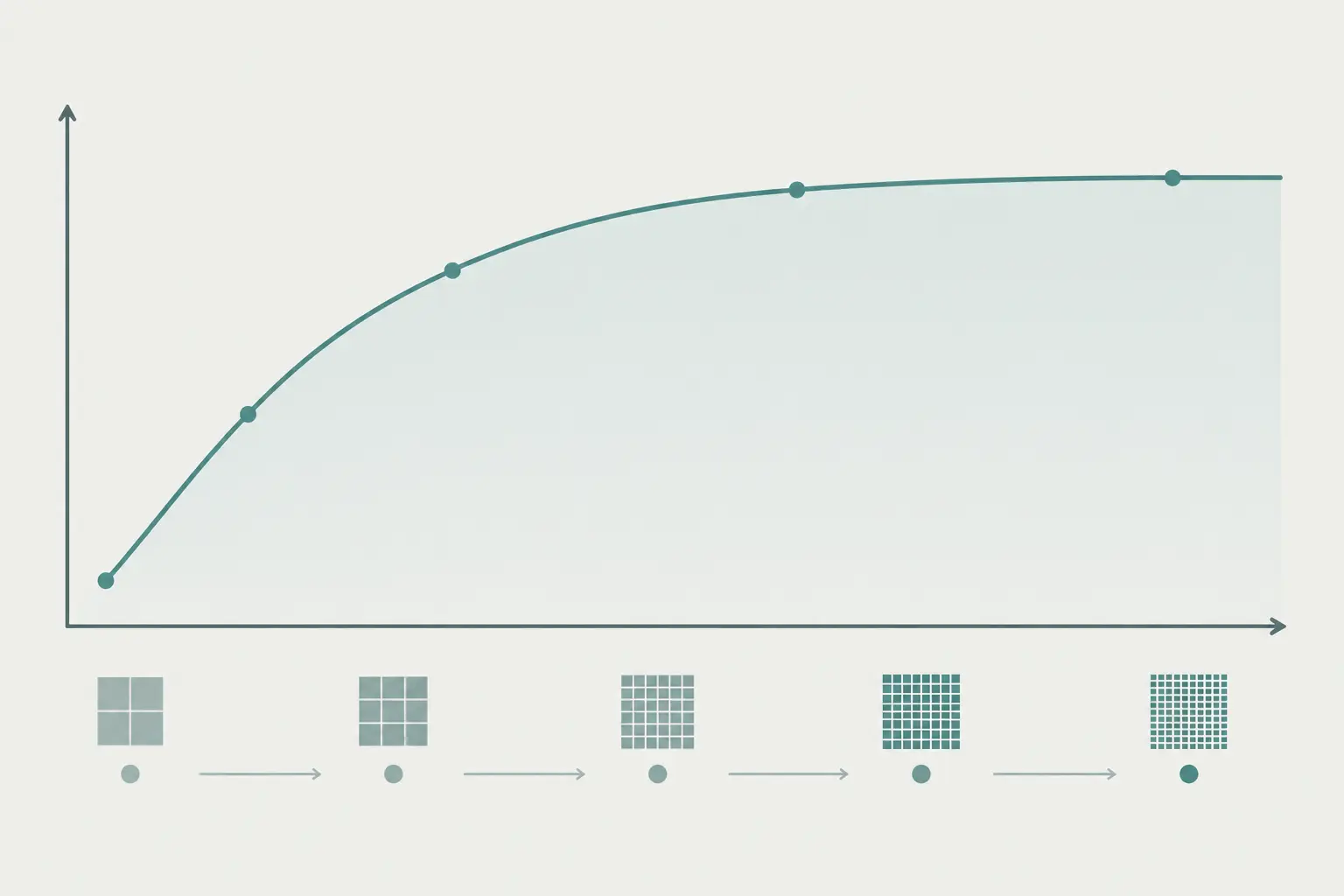
Verification asks whether your simulation is solved correctly — a mesh convergence study (showing results stabilise as mesh density increases, commonly reported as a percentage difference between two mesh resolutions) is the standard evidence here. Validation asks whether the model represents physical reality — comparing your simulation’s predicted fatigue life against your own physical test results, or against published data if physical testing is not feasible within your timeline, is the standard evidence. A simulation-based methodology chapter that reports results with no stated V&V approach is one of the more common gaps a committee flags, since without it there is no basis to trust the simulation’s output.
Step 5: State your analysis and uncertainty approach
For experimental data, state how you handled measurement uncertainty and how many specimens or repeats were used to support any statistical claim — a single test per condition supports a descriptive result, not a statistically defensible comparison between variants. For computational results, state any sensitivity analysis performed (how results change under reasonable variation in input assumptions like material properties or boundary conditions), which is a lighter-weight alternative to full V&V when physical validation genuinely is not feasible.
Step 6: Address ethics and safety approval where relevant
Most mechanical engineering theses working with materials, components, or simulations do not require Research Ethics Board approval, since no human participants are involved. Where a thesis does involve human factors (ergonomic testing, human-operated equipment trials) or hazardous materials and processes, confirm the relevant REB or lab safety approval process with your department before data collection — this is a departmental and institutional safety requirement as much as a research-ethics one, and timelines for lab safety sign-off can run in parallel with, rather than instead of, any REB process.
Step 7: State the limitations your specific method creates
Every methodology choice creates specific, nameable limitations, and stating them is expected rather than a weakness to hide. For the worked example: FEA fatigue predictions carry model-form uncertainty even after mesh convergence and validation, since the model is still a simplification of the physical part; testing only two or three of many possible lattice variants means the results speak to those specific geometries, not to lattice-infill brackets generally; and print-to-print variability in additive manufacturing means results from one printer or one set of print settings may not transfer directly to a different machine. Naming these limitations precisely, rather than a generic “more testing is needed,” is what a strong limitations section does.
A second worked example: CFD for a heat exchanger thesis
Illustrative example, not a real study: a thesis asking “does a modified fin geometry improve heat transfer efficiency in a compact heat exchanger without a significant pressure-drop penalty?” Here a computational approach (CFD) is well justified because physically prototyping and testing many fin geometries is expensive and slow, while CFD lets several geometries be screened efficiently. The methodology chapter would state: the CFD solver and turbulence model used (named explicitly, since different turbulence models produce different results for the same geometry), the boundary conditions (inlet velocity, temperature, outlet pressure), the mesh strategy including boundary-layer refinement near walls, and the validation approach — comparing the baseline (unmodified) geometry’s simulated performance against either physical test data or a published benchmark case before trusting the modified-geometry results. This is the same V&V logic as the first example, applied to a different mechanical sub-field, which is the point: the structure in this article generalises across thermal, structural, and fluid problems by keeping the same four steps — name the method, justify it, describe the setup, and verify and validate it.
What makes a methodology chapter pass versus what gets sent back
- The method is justified against the question, not just named. “This thesis uses FEA” states a fact; explaining why FEA (validated against test data) fits this specific fatigue question is a justification.
- Enough detail to replicate. Missing material properties, mesh details, or calibration information is a common, avoidable gap.
- A stated V&V approach. Simulation results presented with no convergence check or validation comparison read as unverified, regardless of how sophisticated the model is.
- Honest uncertainty reporting. A single test presented as if it were a statistically robust comparison is a common overreach that undermines an otherwise solid methodology.
- Limitations named specifically. A generic “more research is needed” reads as unaware of exactly where this method’s evidence stops being strong.
Where this fits with the rest of your thesis
This chapter’s job is the design and justification of your method; the actual software choice behind an FEA or CFD approach is covered in more depth in CAD and simulation software for a mechanical engineering thesis, and the general chapter-by-chapter structure your methodology sits inside is covered in how to write the methodology chapter of a Canadian thesis and, for a related engineering discipline’s own worked version, the methodology chapter of a civil engineering thesis. If your design involves statistical comparison between test variants, how many participants (or specimens) you need covers the sample-size reasoning this article’s Step 5 referenced only briefly. Once your methodology is designed and you are ready to write the full chapter around it, Tesify can help you draft and structure the prose — the engineering judgment and the data stay yours.
Frequently asked questions
What methodologies are used in mechanical engineering theses?
Four broad approaches cover most mechanical engineering theses: experimental (physical testing of a component or system), computational (simulation using FEA, CFD, or similar), design-and-build (designing, prototyping and testing a device), and analytical (closed-form mathematical modelling). Many theses combine two, most often simulation validated against physical test data.
What is verification and validation (V&V) in a mechanical thesis?
Verification asks whether your model or simulation is solved correctly (mesh convergence, solver settings, numerical accuracy). Validation asks whether the model represents physical reality (comparing simulation output against experimental or published data). A simulation-based thesis without a stated V&V approach is a common gap examiners flag.
Do I need physical testing if I use simulation?
Not always, but a simulation validated only against another simulation, with no physical or published data comparison, is a weaker methodology than one validated against real measurements. If physical testing is not feasible within your timeline or budget, validating against published experimental data from the literature is a common, accepted alternative.
How much detail does a methodology chapter need for a physical test setup?
Enough that another engineer could replicate your test: the equipment and sensors used with model or specification details, the test procedure step by step, the loading or operating conditions, and how measurement uncertainty was assessed. Missing calibration or uncertainty information is a common note examiners give back.
What is mesh convergence and do I need to report it?
Mesh convergence testing shows that your simulation results stabilise as mesh resolution increases, rather than being an artefact of an under-resolved mesh. Most committees expect a stated convergence check (for example, results within a small percentage difference between two mesh densities) in any FEA or CFD-based methodology chapter.
Do mechanical engineering theses need ethics approval?
Most do not, since testing components or materials does not usually involve human participants. If your thesis does involve human factors testing, ergonomic studies with human participants, or hazardous materials and lab safety protocols, confirm the relevant Research Ethics Board or lab safety approval process with your department before starting data collection.
What software should I mention in my methodology if I use simulation?
Name the specific software and version used (for example a stated release of ANSYS, SolidWorks Simulation, or MATLAB), since results can differ between versions and solvers. This site’s own comparison of CAD and simulation software for a mechanical engineering thesis covers the tool-selection decision in more depth.
Does a CFD-based thesis need the same V&V approach as an FEA-based one?
Yes, the same logic applies — a mesh (or grid) convergence study for verification, and comparison against physical test data or a published benchmark case for validation. The specific checks differ by solver and turbulence model, but the requirement to show your simulation is both solved correctly and representative of reality does not change between structural and fluid problems.
What if my thesis is purely analytical with no simulation or testing?
An analytical methodology still needs a validation step of its own — comparing your closed-form model’s predictions against known limiting cases, published analytical or experimental results, or a simplified numerical check. A derivation presented with no comparison against any known result is difficult for a committee to assess as correct.